


Easy Rock Guitar Chords
As a guitar teacher and rock lover, I know how badly beginner guitarists want to learn to the rock classics we all love!
Fear not, I’ve taken the time to organise the easier rock guitar chords below, along with the tab/audio of some simple riff examples:
· Power Chords (5th Chords) & Drop D Power Chords
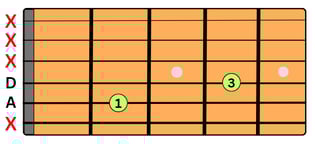
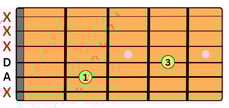
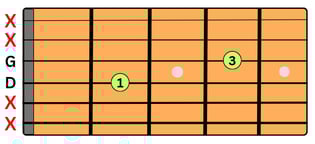
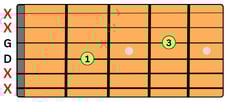
· 4th Chords (First Inversion Power Chords)
· Octaves
· Sharp 5th Power Chords
Power Chords
Let’s start with the most popular rock sound on the guitar, the power chord.
These sound amazing with some gain/overdrive. They’re easy for beginners because you can play them using different fingerings and also with some great sounding open string voicings.
If any of these terms being used are new to you, click here to see a list of common guitar definitions in alphabetical order!
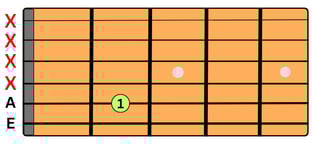
Open String Power Chords
These power chords are usually played by fretting one note with one finger and strumming two strings. They can be played with two fingers but I don’t recommend that; one version of the D5 chord is an exception to this rule as you’ll see in the next groups.
E5
A5
D5
EXAMPLE RIFF TO TRY
T.N.T BY AC DC
Closed Power Chords
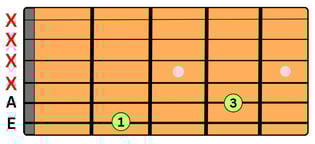
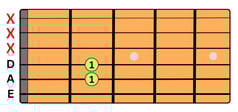
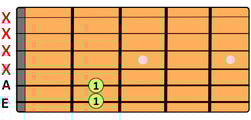
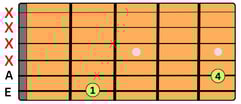
These power chords below only use two different notes like the ones above but they are played using two different fingers; the 1st and 3rd fingers or the 1st and 4th fingers. They are most commonly played from the E and A strings at any fret, but can be played from the D string too.
I always recommend using the 1st and 3rd fingers if you can reach comfortably as that will save you from changing technique later on; if you want to learn the three finger version. Children learning on full size guitars and people with small hands may need to use their 1st and 4th fingers to avoid extra difficulty.
When playing these power chords with an A string root note you should use the tip of your first finger on your left hand to mute the low E string, in case it’s strummed mistakenly. This may not be possible right away as it’s tricky for some, but you should try and do this when you begin learning these power chords if you can.
F♯5
B5
E5
EXAMPLE RIFF TO TRY - YOU REALLY GOT ME BY THE KINKS
Drop D Power Chords
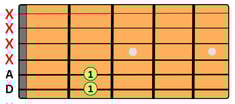
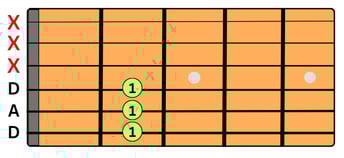
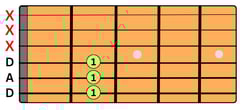
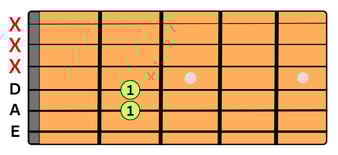
These chords give you the same notes as closed power chords but can be easier to play and/or free up other fingers to add melody to riffs. They can also be played at any fret. You'll need to be careful you don't press down more than three strings by using only the top 3rd of your index finger or you'll get a very different sound.
You do have to tune the guitar differently to use these so if you’re a total beginner, it’s probably best not to move on to these until you’ve mastered the regular ones.
If the regular closed power chords are proving very difficult or you really want to try a song riff in Drop D, you can buy yourself a chromatic clip on tuner or use an app to tune your low E string to D if you’re unsure. Only one string is tuned differently when tuning to drop D, the other strings (A,D,G,B and E) are left the same.
E5
E5
EXAMPLE RIFF TO TRY - SLITHER BY VELVET REVOLVER
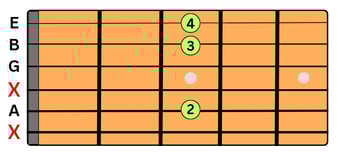
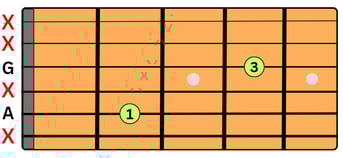
Three Note Open String Power Chords
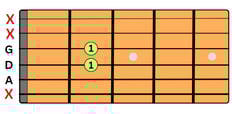
Some of these power chords below also use one finger but now we’re trying to fret two strings with one finger. This is a bit harder so if you can’t play these then stick with the closed power chords above for now; they are the same chords anyway.
When playing these you have to be careful not to press down the other strings below the notes you’re trying to play.
Usually guitarists avoid this by having their finger flat on the two notes they’re playing and then angling the rest of the finger very slightly up and away from the thinner strings. This means the thinner strings aren’t fretted but they are touched lightly which keeps them quiet.
The G5 and C5 are played similarly to a G major and Cadd9 chord, the only difference is the string below the middle finger is muted by the underside of that finger.
E5
A5
D5
C5
G5
EXAMPLE RIFF TO TRY - BACK IN BLACK BY AC DC
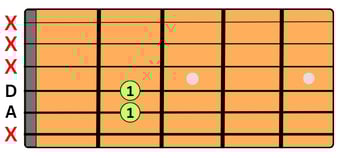
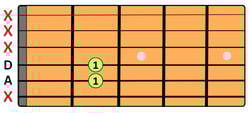
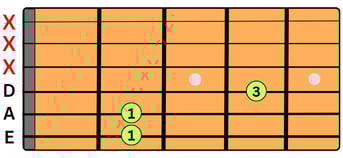
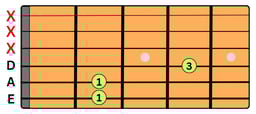
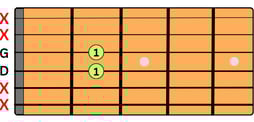
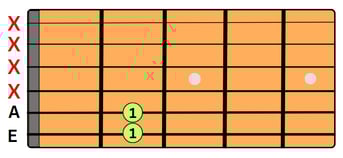
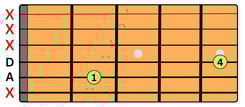
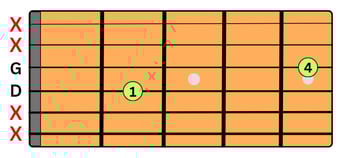
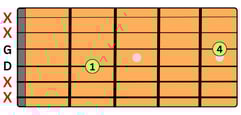
4th Chords (First Inversion Power Chords)
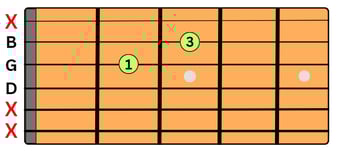
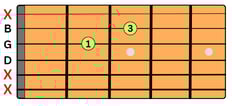
These chords are the same as power chords but they sound different because of the order of the notes/which one is the lowest sounding note (the interval). They are harder to play than regular closed power chords so I suggest you don’t worry about these until you can play the ones above a bit better.
They have a heavier, slightly less stable sound than power chords and so are used in heavier rock music slightly more often.
There are quite a few ways to play these; they’re all the same chord but the more notes that are added, the bigger and fuller the sound. If you’re a total beginner, stick to the two string voicing.
B5/F♯
A5/E
E5/B
B5/F♯
E5/B
EXAMPLE RIFF TO TRY - SMOKE ON THE WATER BY DEEP PURPLE
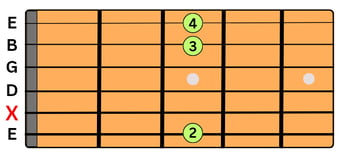
Octaves
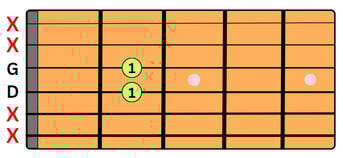
Octaves are a great way to add another element to riffs; they produce a fuller sound than individual notes but aren’t as full sounding as power chords. These are widely used in many styles, from pop to metal. An octave means to play the same note but twelve notes higher or lower.
These are often much more tricky for beginners because on the guitar you have to play two separate strings without sounding a string that’s in between them (whilst muting the string in between). You also have to be careful that you don’t press the string down with your index finger so it can’t be heard.
There are a lot of ways to play these but I’m going to show one way below as for beginners the others are tough and not really necessary in the early days.
F♯
B
EXAMPLE RIFF TO TRY - ALL THE SMALL THINGS BY BLINK 182
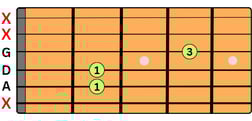
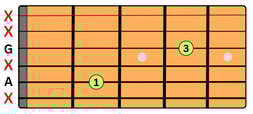
Sharp 5th Power Chords
These chords are great for adding interest to power chord riffs without making things too difficult; if you use the simplest form. They are widely used in many styles and appear a lot in rock and many related styles.
They can be played in quite a few ways but for beginners, we’ll only be using the form below.
EXAMPLE RIFF TO TRY - HELLS BELLS BY AC DC
Tips
Be sure to press the string down hard enough next to the fret bar with your left hand
Don’t hold the plectrum too tightly or strum too hard
Muting is important, put your right hand/plectrum down onto the strings just before changing to the next chord to stop the open strings ringing out










Tips
Try not to strum more strings then you’re meant to whilst you’re learning to mute the unwanted strings
Open chords resonate better than closed power chords and often sound fuller


Tips
Be sure to press your index finger pad down flat and press hard; try to use the top 3rd of your finger mainly. Don’t use the very tip of your finger, your finger should be pointing upwards and not at the guitar
The voicings with more notes will require quite a bit of strength so avoid these at first
Take breaks when practicing these to avoid left hand strain

Tips
You should try to only strum the three strings needed, especially at first
If you are finding these chords somewhat easy to play, try to mute the thinner strings below with the underside of your index finger by touching them lightly










Easy Rock Guitar Chords
Check out all of the beginner rock guitar chords you'll ever need to play those iconic guitar riffs!
Simon Down
9/5/20237 min read